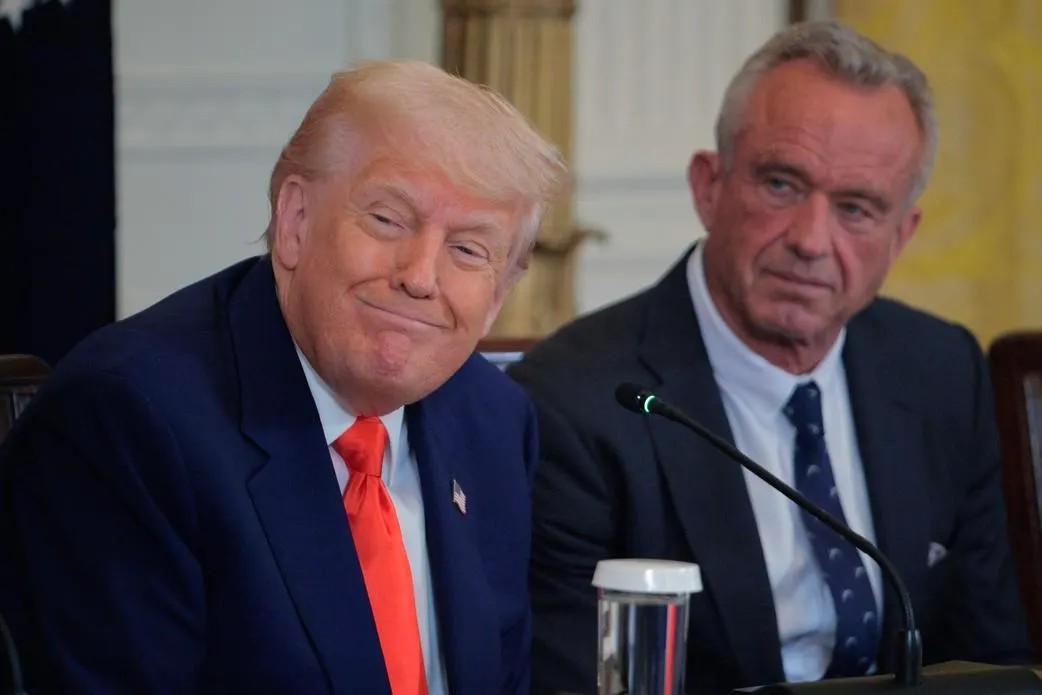
President Trump’s recent statements regarding the hepatitis B vaccine, disseminated via Truth Social, contain significant inaccuracies and misrepresent established medical consensus. These claims, while framed as common sense, pose a risk to public health by potentially undermining vaccination efforts.
CDC Advisory Panel Shifts Hepatitis B Guidance
A recent decision by the CDC advisory panel on immunizations has narrowed recommendations for the hepatitis B vaccine. The panel now suggests administering the vaccine only to infants born to mothers who test positive for the virus, reversing decades of universal newborn vaccination policy. Trump celebrated this change, framing it as a victory against excessive “jabs” for babies.
Trump’s Claims vs. Medical Reality
The President asserted that “the vast majority of babies are at no risk” of hepatitis B. This is demonstrably false. While the virus is commonly spread through sexual contact and shared needles, transmission can also occur through everyday items like razors or toothbrushes from infected individuals. Unvaccinated children remain vulnerable throughout their lives, facing the risk of liver failure, cancer, or death. The CDC estimates nearly half of infected individuals are asymptomatic carriers, further increasing transmission risks to unvaccinated populations.
Trump also inflated the number of required childhood vaccinations, claiming 72 shots. The actual CDC-recommended schedule involves approximately 30 shots by age 18, excluding annual flu and COVID-19 boosters. This exaggeration contributes to unfounded fears about vaccine overload.
Efficacy of Hepatitis B Vaccination
The President questioned the efficacy of the vaccination schedule. However, the hepatitis B vaccine has nearly eliminated the virus in children since 1991, when universal vaccination began. Infections among children and adolescents have declined by 99%. The birthing dose is 90% effective for infants of infected mothers, and a full three-dose regimen provides 98% protection, according to Johns Hopkins School of Public Health.
U.S. Vaccine Policy: Not an Outlier
Trump suggested the U.S. vaccine schedule is excessive compared to other countries. This claim is false; as of 2024, 115 out of 194 WHO member states recommend a universal hepatitis B birthing dose, aligning the U.S. with global standards.
The Risk of Misinformation
The spread of misinformation, especially from high-profile figures like the President, has serious consequences. False claims can instill fear in parents, erode trust in public health institutions, and potentially reverse decades of progress in disease prevention.
Untruths about vaccines, even if framed as “common sense,” can lead to a resurgence of preventable diseases and undermine public health infrastructure.
The President’s statements are not rooted in scientific consensus and should be treated as a dangerous distortion of medical facts.