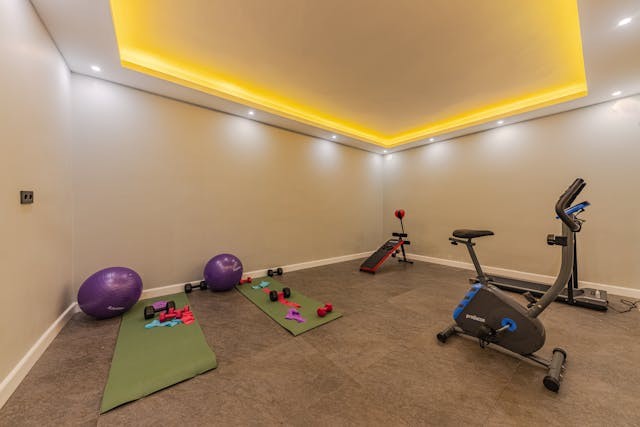
Creating a home gym isn’t about transforming a room into a professional weightlifting facility; it’s about building an environment that supports consistent, long-term healthy habits. A well-designed space, even a small one, removes barriers to exercise, making it far easier to maintain a routine and experience the lasting benefits of regular physical activity.
Why Home Gyms Work: Consistency is Key
The biggest challenge to fitness isn’t knowing what to do; it’s actually doing it. Home gyms eliminate common obstacles : travel time, crowded gyms, and scheduling conflicts. When your workout is just steps away, fitting in a quick session becomes far more realistic. These consistent, even brief, workouts accumulate over time, significantly improving strength, endurance, and overall well-being.
Choosing the Right Space
You don’t need a dedicated room. A garage corner, spare bedroom, or even a portion of a living space can work effectively. The main requirement is enough safe movement space.
- Lighting and Ventilation: Natural light and airflow improve mood and comfort.
- Flooring: Rubber mats protect floors, reduce noise, and enhance stability during exercises.
Versatile Equipment: Less is Often More
Focus on equipment that supports a variety of exercises. Adjustable dumbbells, resistance bands, kettlebells, and a bench provide excellent versatility without requiring excessive space.
- Cardio Options: Rowing machines, stationary bikes, or treadmills offer cardiovascular conditioning when outdoor activity is limited.
- Durability Matters: Invest in high-quality equipment built to withstand consistent use.
Creating a Realistic Workout Routine
Forget complex programs; simplicity is key. Aim for three to four workouts per week. Full-body routines, including squats, presses, rows, and core exercises, maximize efficiency. Short, focused sessions (20-30 minutes) are often more sustainable than occasional long workouts. The convenience of a home gym makes consistency achievable.
Designing a Motivating Environment
An organized space encourages more frequent training. Clutter creates distractions. Keep equipment accessible and neatly stored.
- Mirrors: Improve form awareness and make the space feel larger.
- Music: Boost energy and focus during workouts.
Recovery and Long-Term Health
Exercise is just one piece of the puzzle. Prioritize recovery with stretching, mobility work, and adequate sleep. Proper nutrition and hydration further enhance results. These habits, combined with consistent training, support sustainable fitness for years to come.
Ultimately, a home gym should remove barriers to movement, making exercise a natural part of daily life. By prioritizing consistency over complexity, you can build a lasting fitness routine and experience the full spectrum of physical and mental benefits.