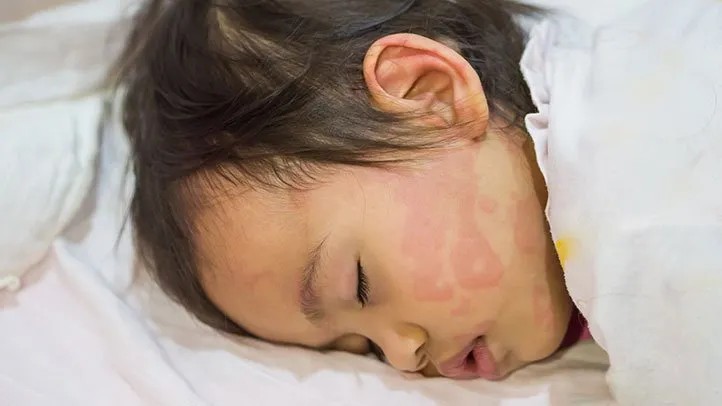
Hives are a common skin reaction in children, appearing as raised, red welts that can cause significant discomfort. While often harmless, understanding how to manage them effectively is crucial for parents. Most children experience hives at least once, typically due to allergies or infections, but severe reactions requiring immediate medical attention are possible.
What Do Hives Look Like?
Hives present as red, raised bumps on the skin, similar in appearance to adult hives. They can appear anywhere on the body and tend to resolve within 24 hours, though new hives may emerge as the reaction continues. The key is that hives themselves are not contagious.
Common Causes of Hives in Children
Hives develop when the body reacts to a trigger. These triggers can include:
- Allergens: Foods (milk, eggs, peanuts, wheat, soy), insect bites, medications (especially antibiotics), fragrances, soaps, lotions, and pet dander.
- Infections: Strep throat or common childhood viruses like the common cold.
- Other Factors: Stress, physical pressure, temperature extremes, exercise, or scratching.
Notably, food allergies are more often the cause of hives in children than in adults, potentially requiring allergy testing to identify the source.
When to Seek Emergency Care
While most hives are manageable at home, certain symptoms demand immediate medical attention. Anaphylaxis, a severe allergic reaction, presents with difficulty breathing, a swollen throat, rapid heartbeat, or fainting. Another serious condition, angioedema, causes swelling of the face, lips, hands, feet, or genitals, which can also obstruct breathing. If your child exhibits these symptoms, seek emergency care immediately, as an epinephrine injection may be necessary.
At-Home Management for Mild Hives
If hives aren’t accompanied by severe symptoms, parents can manage them at home to relieve discomfort:
- Over-the-Counter Antihistamines: Medications like diphenhydramine (Benadryl) or cetirizine (Zyrtec) block histamine release, reducing itching. Always follow age and weight-based dosage instructions on the label.
- Prevent Scratching: Encourage your child to avoid scratching, which can break the skin and lead to infection. Loose-fitting clothing can help minimize irritation.
- Cool Compresses: Applying cool washcloths or cold packs can provide temporary itch relief (unless cold temperatures trigger the hives).
- Oatmeal Baths: Lukewarm baths with colloidal oatmeal can soothe irritated skin. Avoid harsh soaps, bubble baths, or scented lotions. Afterward, apply a gentle moisturizer.
Tracking Triggers and Prevention
Keep a log of when hives appear, what your child was doing, and what they ate in the preceding hours. This can help identify triggers to avoid in the future. If a trigger is suspected, eliminate it from your child’s exposure to see if symptoms resolve.
Hives are a common childhood issue. By understanding the causes, recognizing severe symptoms, and implementing appropriate management strategies, parents can help their children find relief and prevent future reactions.