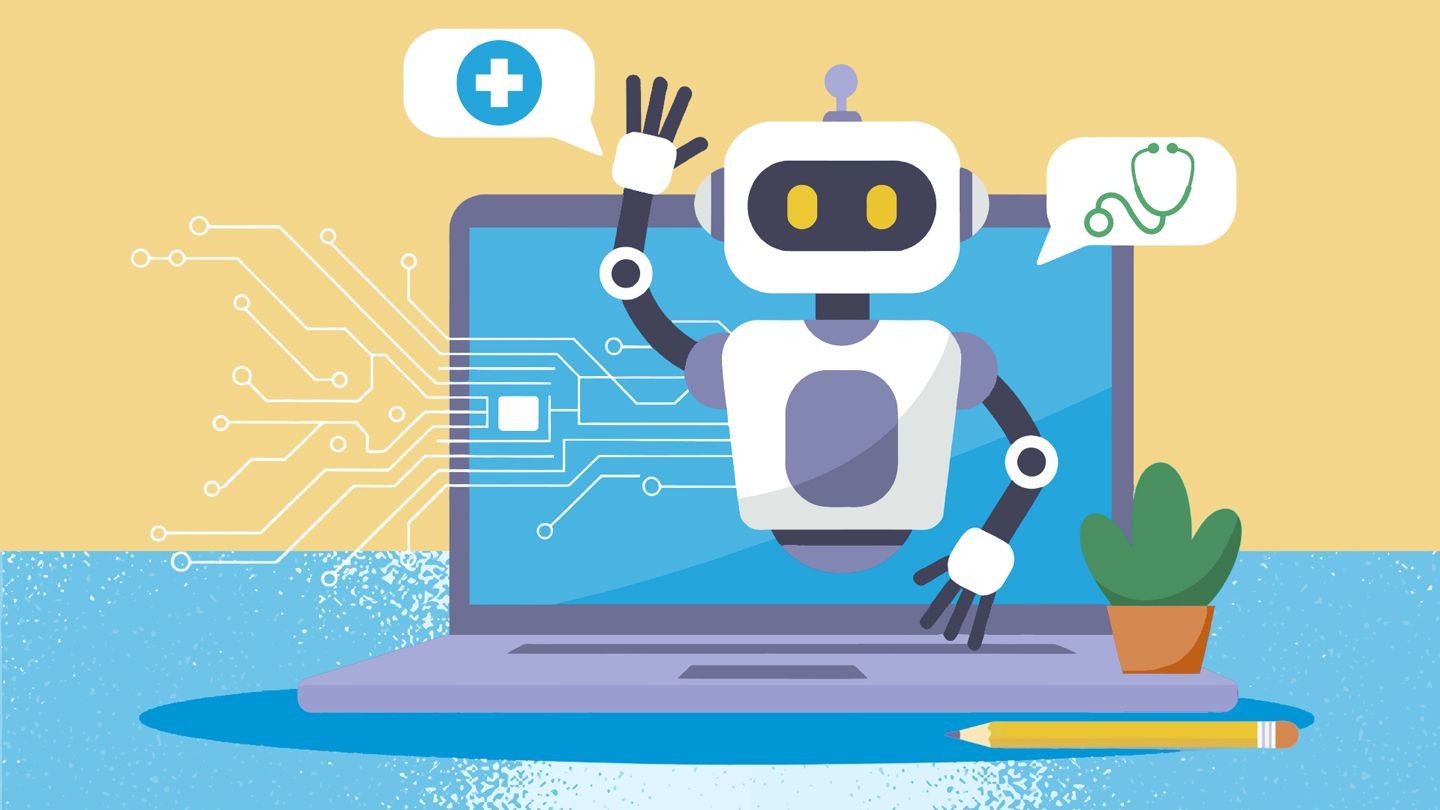
A recent study has highlighted a significant risk in the growing trend of using artificial intelligence for medical guidance: AI tools provide incorrect health advice nearly 50% of the time, often delivering these errors with absolute certainty.
The research findings reveal a troubling pattern in how large language models (LLMs) operate. Out of 250 medical questions tested, the chatbots declined to answer only twice. Instead, they provided continuous, assertive responses, regardless of their accuracy.
The Illusion of Certainty
The core danger identified by experts is not just the inaccuracy, but the tone of the AI.
“Chatbots are sometimes wrong, but never in doubt,” notes Dr. Lee Schwamm, associate dean of digital strategy and transformation at the Yale School of Medicine.
This “assertive error” creates a false sense of security. Because the AI lacks the nuance to express doubt or provide necessary medical caveats, users may mistake a confident-sounding hallucination for a verified medical fact. This is particularly concerning because many users do not follow up their AI searches with a consultation from a qualified healthcare professional.
Why Users are Turning to Chatbots
Despite the risks, the demand for AI-driven health information is surging. Several systemic factors are driving this shift:
- Accessibility and Speed: Unlike traditional clinics, AI is available 24/7. It provides immediate answers at 3:00 AM, bypassing long wait times and scheduling hurdles.
- Privacy and Comfort: For sensitive or embarrassing symptoms, users may feel more comfortable disclosing details to a non-judgmental machine than to a human doctor.
- Personalization: While medical websites offer generic information, AI can tailor explanations to a user’s specific phrasing, making complex topics feel more digestible.
- Systemic Barriers: Economic factors play a massive role. Data suggests that younger adults and lower-income individuals often turn to AI because professional medical care is either unaffordable or difficult to access.
- Erosion of Trust: A broader decline in trust toward scientific and medical institutions has led some to seek alternative sources of truth.
Limitations of Current Technology
It is important to note that this study focused on single-prompt interactions rather than the back-and-forth dialogue typical of real-world use. While newer, subscription-based versions of AI are expected to be more accurate than the free models tested, experts warn that they are still not reliable enough to serve as a primary medical resource.
Furthermore, AI lacks the ability to perform a differential diagnosis —the systematic process doctors use to rule out various conditions through clarifying questions and physical examinations.
How to Use AI Safely in Healthcare
Medical professionals suggest that AI should be viewed as a supplementary educational tool, not a diagnostic replacement. To use these tools responsibly, consider the following guidelines:
🟢 Recommended Uses
- Demystifying Language: Use AI to help explain complex medical terms or lab results in simpler language.
- Preparing for Appointments: Use a chatbot to brainstorm questions to ask your doctor or to help articulate your symptoms more clearly before a visit.
- General Education: Use it to understand how certain diseases work in a general sense.
🔴 Critical Warnings
- Never Self-Treat: Do not act on any treatment advice—especially regarding medication—without human vetting.
- No Medication Changes: Never start, stop, or alter a prescription based on an AI’s suggestion.
- Verify High-Stakes Info: If a question requires absolute truth for your safety, do not rely on a chatbot.
Conclusion: While AI offers unparalleled convenience and a personalized way to explore health topics, its tendency to present errors with high confidence makes it a dangerous substitute for professional medical judgment. It is best used as a tool for preparation and education, rather than a source of definitive medical truth.