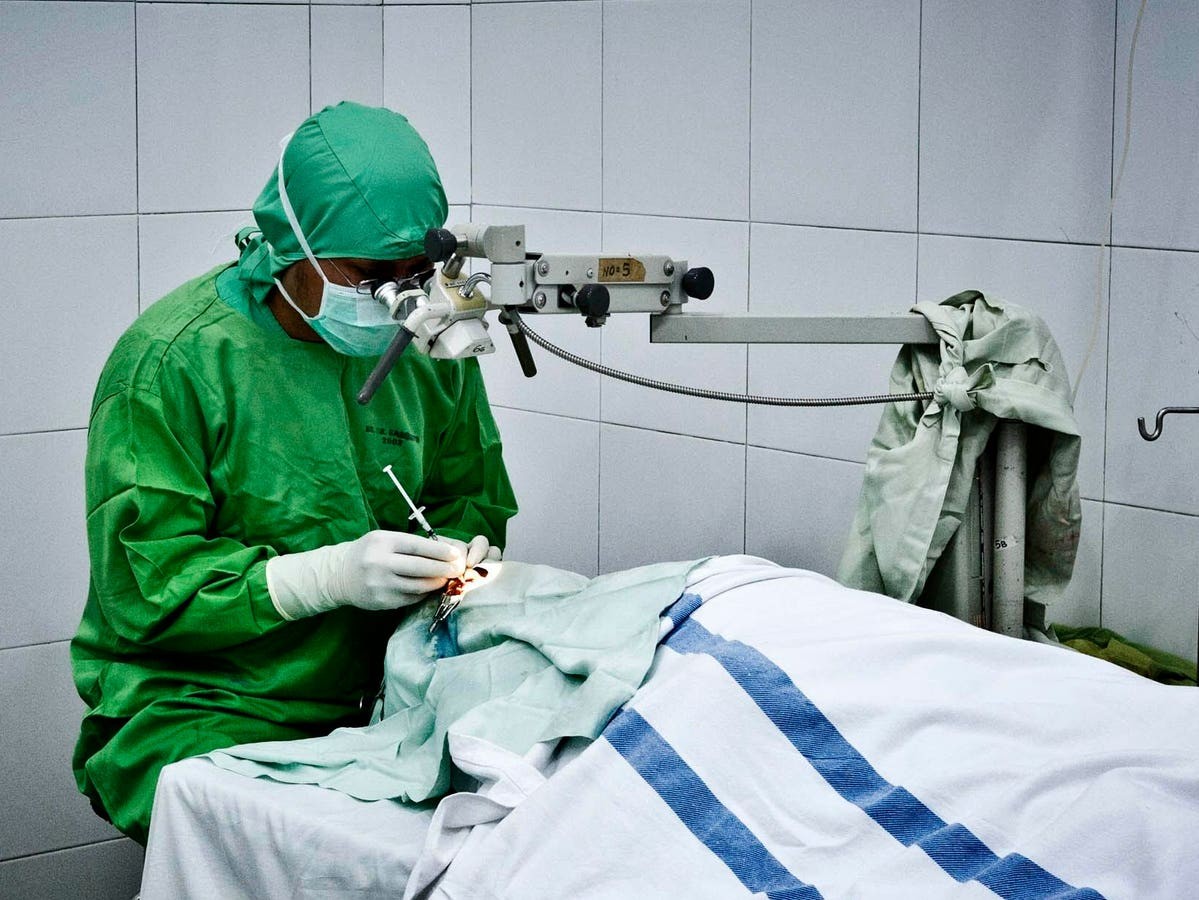
Cataracts affect over 94 million people worldwide, yet for nearly half of those requiring surgery to prevent blindness, access to care remains elusive. A recent study published in The Lancet Global Health highlights this stark disparity, revealing that while cataract surgery is a routine and highly effective procedure, systemic barriers leave millions without sight-restoring treatment. However, targeted initiatives like the Bloomberg Philanthropies Vision Initiative are beginning to bridge this gap, having already facilitated over 59,100 surgeries since its launch in May 2025.
Understanding the Lens of Vision
To understand the severity of the crisis, one must first understand the mechanics of vision. The lens, located behind the iris (the colored part of the eye), functions as a natural camera lens. It focuses incoming light onto the retina—the layer of photoreceptors at the back of the eye—which then transmits signals to the brain.
In healthy eyes, this process is seamless. However, beginning in a person’s 40s and 50s, age-related changes cause proteins within the lens to break down and clump together. This clouding is known as a cataract.
While early-stage cataracts may cause only minor blurriness, they progressively worsen. The lens becomes thicker, stiffer, and increasingly opaque, scattering and blocking light. If left untreated, this condition inevitably leads to blindness. Crucially, this is not a degenerative disease of the brain or nerves, but a mechanical obstruction that is entirely reversible through medical intervention.
A Routine Cure, An Unequal Access
The medical solution to cataracts is straightforward and highly successful. During cataract surgery, an ophthalmologist makes a small incision under local anesthesia, removes the clouded natural lens, and replaces it with an artificial intraocular lens made of plastic or silicone.
- Procedure Time: Approximately 15 minutes.
- Recovery: Full healing typically occurs within four to six weeks.
- Outcome: Most patients experience significantly improved vision within days.
Despite the simplicity and efficacy of the procedure, access is severely uneven. The Effective Cataract Surgical Coverage study group analyzed 233 datasets from surveys conducted between 2003 and 2024 across 68 countries. The findings reveal a dramatic global divide:
- Highest Coverage: Qatar reported a coverage rate of 77.7% in 2023.
- Lowest Coverage: Burundi reported a mere 2.1% coverage rate in 2024.
- Global Average: Approximately 48.2% of people needing surgery had access to it in 2025.
While the trend is positive—with coverage projected to rise from 43.9% in 2020 to 52.3% by 2030—nearly half the world’s population with treatable blindness remains without care.
Bridging the Gap: The Bloomberg Vision Initiative
Addressing this disparity requires coordinated global effort. In 2024, billionaire philanthropist Michael Bloomberg, founder of Bloomberg Philanthropies, announced a $75 million investment in the Vision Initiative. The program aims to provide 11 million vision screenings, distribute seven million pairs of eyeglasses, and restore sight to 250,000 people through cataract surgery by 2027.
The initiative leverages partnerships to maximize impact, notably collaborating with Warby Parker. Through programs like “Buy a Pair, Give a Pair” and the “Pupils Project,” the initiative has expanded access to eyewear and eye exams for students and workers in underserved communities.
According to the Bloomberg Philanthropies annual report, the initiative has already achieved significant milestones:
* Over 706,600 pairs of eyeglasses distributed across six countries.
* More than 59,100 cataract surgeries facilitated in Bangladesh, Cambodia, Ethiopia, Kenya, and Nigeria.
The Ripple Effect of Restored Sight
The impact of cataract surgery extends far beyond individual health. Restoring vision has profound socioeconomic implications:
* Education: Children with corrected vision are better able to learn and attend school regularly.
* Economic Productivity: Adults can return to the workforce, increasing household income and community economic stability.
* Safety: Improved vision reduces the risk of accidents and injuries.
“Impaired vision has long been an overlooked problem around the world. Getting more people access to eye exams, eyeglasses, and cataract surgery is literally a visionary effort.”
Conclusion
While cataracts remain a leading cause of preventable blindness, the path to resolution is well-defined and medically accessible. The disparity in surgical coverage highlights a critical failure in global health equity, but initiatives like the Bloomberg Vision Initiative demonstrate that targeted investment and strategic partnerships can rapidly change the trajectory. As coverage rates climb, the world moves closer to a future where blindness caused by cataracts is no longer a sentence, but a solvable condition.