Jessica Brandon’s life fractured in 2016 when her youngest son, Drew, was diagnosed with stage 4 T-cell lymphoblastic lymphoma. It is an aggressive form of non-Hodgkin’s lymphoma. The immediate threat was life-threatening. Yet, the mundane tasks of daily survival vanished from her plate. Mowing the lawn, making dinner, cleaning the house, or shuttling her two older children around town simply stopped being her responsibilities.
Her family and the wider community in Acworth, Georgia, moved fast. They provided support wherever it was needed. Most of the time, they did not ask first.
Brandon, an elementary school teacher, spent months in the hospital. She stayed by her son’s side during the early, uncertain days of treatment. Complications arose. The situation was touch-and-go. She was floored by the external help.
A parent of one of her former students set up a GoFundMe page to cover medical costs. Brandon recalls that the person did not ask permission to start it.
“I’m grateful she did it [without asking] because I would have said no,” she says.
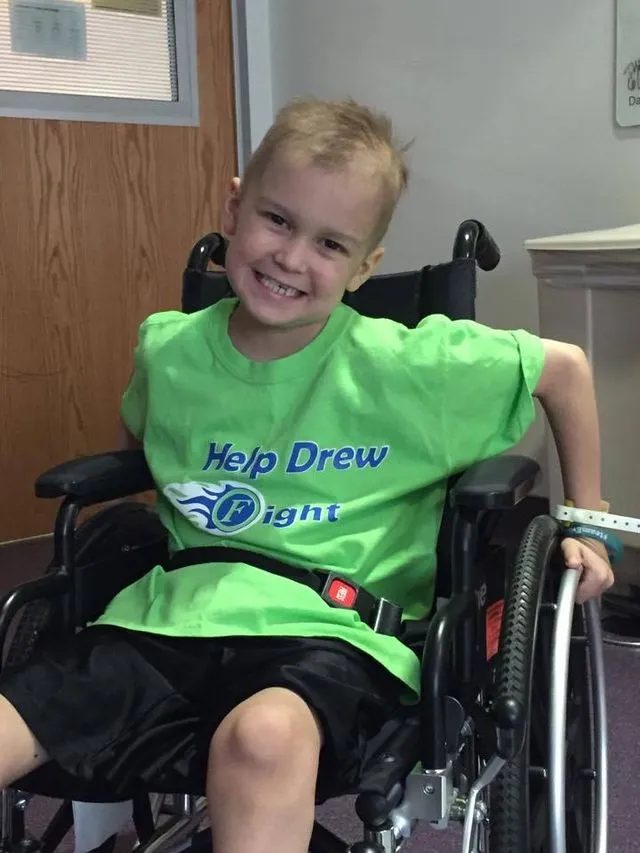
The community went further than just money. They created T-shirts and bracelets featuring a special logo for the cause. Proceeds went directly to Drew’s care fund. Thousands of dollars were collected. That is a huge blessing for a family facing stage 4 cancer costs.
But the financial relief was not the only benefit. Seeing the shirts and bracelets out and about in the community lifted their spirits. It made the fight visible. It made the support tangible.
How does a community rally around a sick child? Often, it starts with one person recognizing a need. Then others follow. The specific details matter less than the volume of care. In Acworth, that volume was high.
Why does this matter for families dealing with pediatric cancer? Isolated families struggle. The logistical burden of care can be as crushing as the medical bills. When neighbors, friends, and former students step in, the load is shared. The money helps. The visibility helps. The fact that people show up without being asked changes the emotional landscape entirely.
Brandon’s experience highlights a specific type of support: proactive community intervention. It is not just about giving money. It is about taking the load off the primary caregiver. It is about making sure the family does not have to navigate the crisis alone.
Where did this support come from? From the local network. From former students’ parents. From neighbors. From people who saw the crisis and acted.
Which aspects of community support are most impactful? For Brandon, it was the combination of financial aid and public visibility. The GoFundMe covered costs. The merchandise signaled that the fight was being watched and supported. Both elements mattered.
The difference between receiving help and asking for it is significant. Brandon would have declined a formal request. The unrequested support felt different. It felt like genuine care rather than a transaction. This nuance is often overlooked in discussions about community resilience.
In cases of aggressive childhood cancers like T-cell lymphoblastic lymphoma, time is critical. The emotional toll on parents is immense. Community support that addresses both practical and emotional needs can make a difference. It does not cure the disease. But it sustains the family while the medical team works.
Jessica Brandon’s story
Why Vague Offers to Help Make Medical Crises Worse
The phrase “let me know if there’s anything I can do” sounds kind. It usually is. But for someone drowning in a terminal diagnosis or a sudden medical crisis, it often feels like a trap. Jenna Oltersdorf, whose mother was facing a terminal illness in Austin, Texas, admits she grew to hate the sentence. “It comes from a good place, but rarely do people ever act on it,” she says. When you are in severe distress, the idea of delegating tasks is the last thing on your mind. You are too busy surviving.
Heather Von St. James, an eleven-year cancer survivor from Roseville, Minnesota, agrees. “My mind is already so full of stuff, and especially if it is at a time during crisis!” she explains. “It is darn near impossible to figure out what you need, everything is in chaos.”
The Cognitive Load of Asking for Help
It is not just a matter of bad timing. There is a neurological reason why asking a sick person to specify their needs often fails. Gennifer Morley, a psychotherapist in Boulder, Colorado, explains that when people are in crisis, the logical part of their brain doesn’t function as well. Asking them what they need is commonly a waste of time. They often cannot even think of what they require.
There is also the factor of exhaustion. For the patient or caregiver, the energy cost of explaining their situation to a friend might exceed the energy gained from the potential help. “Just isn’t worth the energy,” Morley notes.
So, what actually helps? Specificity. Morley suggests offering two to three concrete actions. “The best thing to do is say, ‘I will help in any way that I can,’ then offer specific things,” she says. If the person shows interest, you act on it with as little support from them as possible. Food, errands, child care, or just sitting in silence with them in whatever mood they are in, these are tangible offers.
Avoiding Unwanted Visits and Imposed Solutions
Not everyone wants a casserole. In fact, showing up unannounced with food can backfire. Dr. Marni Amsellem, a psychologist based in Connecticut, points out that well-meaning friends may inadvertently make things harder by insisting on doing what they want to do, rather than what the patient actually desires.
If someone is not feeling well, they may prefer to be alone. A visit can become a burden because the patient feels they need to entertain guests. They might have to stay awake when they really need to nap. This unintentionally creates stress. If you are not sure if a visit is welcome, do not assume it is.
How to Make It Easy to Accept Help
Holly Wolf of Reading, Pennsylvania, who has helped family members with cancer, offers a practical framework for offering aid without adding burden. The goal is to remove the administrative load from the sick person.
- Ask a question with specific information. Instead of “I can bring food,” ask: “Would it be helpful if I made meatloaf, mashed potatoes and green beans and brought it to the house on Wednesday night about 6 p.m.?” This tells the patient exactly what you are planning to do.
- Give specifics on your availability. Say, “I’m available on Wednesday and Friday afternoons from 1-5. Would you like me to take you to a doctor’s appointment or would running errands be more helpful?”
- Make it easy to accept help. Offering to get a cleaning service is great, but only if you handle the logistics. If the sick person has to call, make arrangements, and clean up a bit before the cleaner arrives, you have not actually helped. Once you get the green light, set up the appointment yourself.
- Offer to stay with the sick person and let the caregiver go. Do not require an explanation of where the caregiver is going. Just give them a time block where you will be there.
Digital Tools and the Danger of Disappearing
Technology has lowered the barrier for support. Platforms like Meal Train allow friends to sign up for specific food deliveries on designated days, removing the guesswork from both sides. Crowdfunding sites, including GoFundMe, now have specific functions to raise money for medical expenses, helping to relieve the financial burden of costs not covered by insurance.
But tools only work if people use them. Samantha Markovitz, a Mayo Clinic certified wellness coach, warns against disappearing from a friend’s life just because their new medical status makes you uncomfortable. It is okay to start with a general offer of support. It is not okay to end there.
“Starting with ‘Let me know if I can help’ can be a springboard into a situation that is new for both of you. Just don’t let your support end there.”
The challenge is moving from the initial, nervous phone call to the second one, and the third, and the check-in a month later. That is where the real support lives. Not in the first sentence, but in the follow-up.