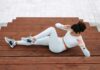
Levodopa is a miracle. It gets you moving when nothing else will.
But it has a price.
After years of treatment, the body starts rebelling with dyskinesia—those involuntary, writhing movements in the face or limbs. It is usually the drug itself. Or rather, how much of it you take. But that is only half the story. The brain is a mood ring. Your emotions, your dinner, and even a bad night’s sleep can twist that movement into something uncontrollable.
You did not imagine it. You are not “too dramatic.” The triggers are physiological, chemical, and stubborn.
How stress amplifies involuntary Parkinson’s movements
Think about your day. The stiffness. The slow steps. The fear of falling. It is exhausting just to exist in a body that fights you.
Stress triggers a cascade.
“Even a cold or a long could be stressful,” Kathleen Poston, a Stanford neurology professor, noted in an interview.
Acute stress makes motor symptoms spike. Freezing. Tremor. And dyskinesia.
A survey of 5,001 Parkinson’s patients found stress worsened everything. It is a universal amplifier of discomfort. The flip side offers a lifeline: mindfulness works. Real relief came from physical exertion—yoga, cycling, walking. The act of moving, ironically, calms the movement.
Why anger and joy trigger similar neurological responses
Anger is tricky. A tense conversation with a caregiver. A broken item. Frustration hits fast.
It dumps norepinephrine into your system. That fight-or-flight chemical tells your muscles to jerk, to thrash.
Dr. Poston says adrenaline prompts release worsens dyskinesia directly.
Happiness does the exact same thing.
Joy releases the same neurotransmitters. You laugh at a joke; your arm flails. It is jarring for onlookers. It feels embarrassing to you.
“For most people… these movements aren’t a problem,” Alexander Pantelyat at Johns Hopkins argues. “Some prefer extra movement over being ‘locked up.'”
Locked up is the alternative. That is the “OFF” state. Better to move too much than not at all? Maybe. Cathi Thomas, an RN at Boston University, says communication with families helps prevent the anger spiral that fuels this cycle.
The role of sleep deprivation in worsening levodopa side effects
Sleep is not a luxury in Parkinson’s. It is medication management.
The average patient sleeps just over five hours a night. They wake twice as often as non-PD sleepers. Stiffness. Cramping. Insomnia.
Bad sleep means bad days. The next morning, levodopa acts erratic. The dyskinesia returns with a vengeance.
Stick to a schedule. No napping past two in the afternoon. The American Parkinson Disease Association suggests one short nap max. Keep the circadian rhythm intact. If the body doesn’t reset, the brain won’t regulate the drugs correctly.
Why protein-rich foods interfere with Parkinson’s medication absorption
Breakfast matters.
Protein competes.
Levodopa needs a pathway into the brain. The blood-brain barrier has gates. Large amino acids from protein—meat, eggs, dairy—crowd that same gate. It causes traffic congestion.
Your levodopa gets stuck outside. Or it surges later, unpredictably. This causes “on-off” fluctuations.
Low-protein diets help stabilize levodopa levels for some. But starving yourself of protein is dangerous.
Work with a dietitian. Shift your protein to dinner if your medication works best in the morning. Timing is the weapon here, not restriction alone.
Balancing levodopa dosage to minimize motor complications
Todd Herrington, a Harvard neurologist, puts it simply. Too much drug triggers the writhing. Too little locks you in place.
Finding the middle ground is the doctor’s hardest job.
Each body metabolizes levodopa differently. One pill works for one hour for Patient A. For Patient B, it lasts three. The “on-off” phenomenon is a dance. Step too fast, you dyskinesia. Step too slow, you freeze.
The goal isn’t elimination of dyskinesia—it’s reduction of its impact. It is about tolerable trade-offs.
If you are stuck between the two, speak up. Adjust the dose. Switch formulations.
It never settles completely. It shifts. You adapt. And sometimes, that’s all you can do.