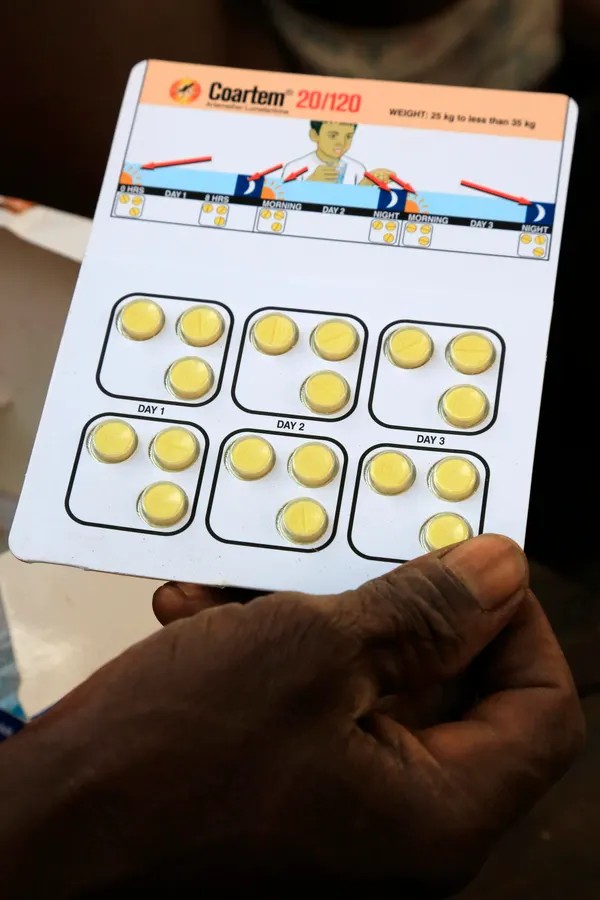
The clock is ticking on artemisinin. It is the gold standard. The bedrock. The drug that has kept millions alive for over two decades. But the malaria parasite is not idle. It is adapting. Learning. Waiting.
The first whispers of resistance arrived in East Africa ten years ago. They were quiet then. Now, they are shouting.
The East African Hotspot
Look at Uganda. It is the epicenter. Boni, an epidemiologist tracking this crisis, doesn’t mince words. The challenge there is triple-thresholded: the parasite count is high. The resistant strains are high. The overall burden of malaria is high. It is a perfect storm.
But the contagion of resistance does not stop at borders. Scientists have confirmed partial artemisinin resistance in Eritrea, Rwanda, and Tanzania. Suspicions linger in other nations, hovering like bad weather. In most of Africa, the scientific community is watching. Watching closely. They have a red line: 10%. Once treatment failure exceeds this percentage in a given area, protocols change. The drugs are swapped.
West African researchers are sleeping with one eye open. They are frantically checking data, praying their resistance levels haven’t quietly crept up to match the East African nightmare.
The Blinds Spot in the Surveillance Net
Here is the messy reality. Surveillance is patchy. Inconsistent. Between nations and within them, there are gaps. Large ones.
Tanzania and Burkina Faso are exceptions. They have comprehensive molecular surveillance systems. They can spot significant mutations quickly. Most countries? Not so much.
In Burkina Faso, molecular biologists haven’t found the genetic mutations that would render rapid diagnostic tests useless. Yet. They cannot relax. They lack data from nearly two-thirds of the country’s sentinel sites. The health facilities that act as early warning stations are silent. Or underfunded. Or unreachable.
“We need to really continue making the surveillance to at least be sure it’s not happening somewhere,” says Issiaka Soulama. He heads the Molecular Biology Laboratory at the National Center for Research and Training on Malarie in Ouagadougou.
They are working with a two-year lag. To establish a true baseline, they need three consecutive years of solid data. Three years is an eternity when a parasite is evolving in real time.
Michael Audu, an independent policy researcher in Abuja, calls this dangerous. “We should not just wait until our medicines are falling apart,” he argues. He wants systematic tracking. Not just of failures, but of early warning signs. Specifically, mutations in a gene called Kelch13.
The Lego Blocks of Resistance
Kelch13 is the key. Or at least, the clue. Researchers worldwide are trying to unspool its secrets.
Tobias Spielmann leads the Malaria Cell Biology group at the Bernhard Nocht Institute in Hamburg. He describes the parasite’s proteins as like Lego. Thousands of them. Interconnected. Complex.
His team’s experiments reveal a stark truth: without Kelch13, the malaria parasite does not grow. It stalls. It dies.
“Resistance is caused by less Kelch,” Spielmann explains. Mutations in this gene disrupt the protein’s normal function. The parasite becomes less efficient at digesting hemoglobin in the early “ring” stage of its lifecycle inside human blood.
It sounds counterintuitive. Less nutrition for the parasite should mean good news for the patient. Wrong.
Spielmann clarifies the paradox: “Anything that reduces eating reduces resistance.” Why? Because artemisinin is activated by hemoglobin digestion. To kill the parasite, you actually need it to eat. The drug works best when the parasite is voracious. Slower digestion means the drug isn’t triggered. The parasite survives.
The biology is crazy. Messy. Unpredictable. But the link between Kelch13 mutations and increasing treatment failure is becoming undeniable. And yet, surveillance gaps persist. Particularly in parts of Nigeria.
“Resistance could absolutely be emerging in Nigerian States right now without one even being aware,” Audu says. “That’s the surveillance void. In practical terms, that’s terrifying.”
The Cost of Doing Nothing
Artemisinin-based therapies are not the only hope. Hope exists.
GanLum is the first new class of antimalarial drug since artemisinin-based combination therapies (ACTs) were introduced 25 years ago. Early results are promising. It offers a lifeline, an alternative as parasites start to tolerate older drugs.
But history is a harsh teacher. Antimalarial drugs rarely last forever. Before ACTs, older drugs failed. Resistance soared. The death toll skyrocketed.
“If you’re releasing new drugs into a broken health system, you will experience the same thing,” Audu warns. Investment in infrastructure is crucial. Without it, the next generation of drugs will face the same resistance within years.
Funding is the bottleneck. Always the bottleneck.
Boni estimates global malaria funding hovers around $40 per case. It is pitifully low. How an African country uses those resources determines the outcome. Rwanda has moved swiftly. They’ve rotated drugs. They’ve contained the spread. Uganda? Fewer resources. Higher case numbers. Slower response. The consequences? We don’t know yet.
Tracking resistance costs money. Skilled staff. Supplies. Well-maintained labs. Even basic equipment is expensive to buy and ship. The Gates Foundation supports molecular surveillance in Burkina Faso. But money runs out. Expanding this work remains a barrier.
Diversifying treatments helps stave off resistance. But many African countries rely heavily on a single type: artemether-lumefanterine. Burkina Faso, like some others, is moving toward multiple first-line therapies. “Something is happening in terms of reducing sensitivity,” Soulama says. “We need to prepare.”
The False Economy of Cheap Medicine
Making medicines locally could cut costs. African manufacturing is growing. But slowly.
Audu understands the temptation to cut surveillance costs. In Nigerian currency terms, every naira spent on monitoring is a naira not spent on treatment. Immediate care versus distant threats. It seems logical.
It is wrong.
“Surveillance is not competing with treatment. Surveillance protects treatment,” Audu argues. “Every antimalarial tablet purchased today depends entirely on continuous drug effectiveness.”
His estimate? Resistance establishment across West Africa could generate $78 billion in economic loss over 15 years. A network in underserved areas like northwestern Nigeria would yield a massive return.
The financial crunch tightened last year. USAID, a major funder of malaria programs, dissolved its support. Audu calculates that for every dollar saved in short-term bilateral aid cuts, the long-term cost of amplified artemisinin resistance ranges between $11 and $48. The most conservative estimate? An eleven-fold increase in future costs.
Without action, resistance mounts. It accumulates. Like sediment.
“The continent should take this very, very seriously,” Audu says. “This is an emergency.”
But it is a slow-moving emergency. Hard to panic over. Boni compares it to a broken dam. Not a forest fire. Fires burn out. Floods don’t. They keep coming. You must work to slow or reverse the path. Do nothing, and the water just flows forward.
Soulama looks at the data. The gaps. The lag.
“I think we don’t have a choice,” he says.
Reporting for this article was supported by a Maria Lep tin / EMBO Science Journalism Fellowship.