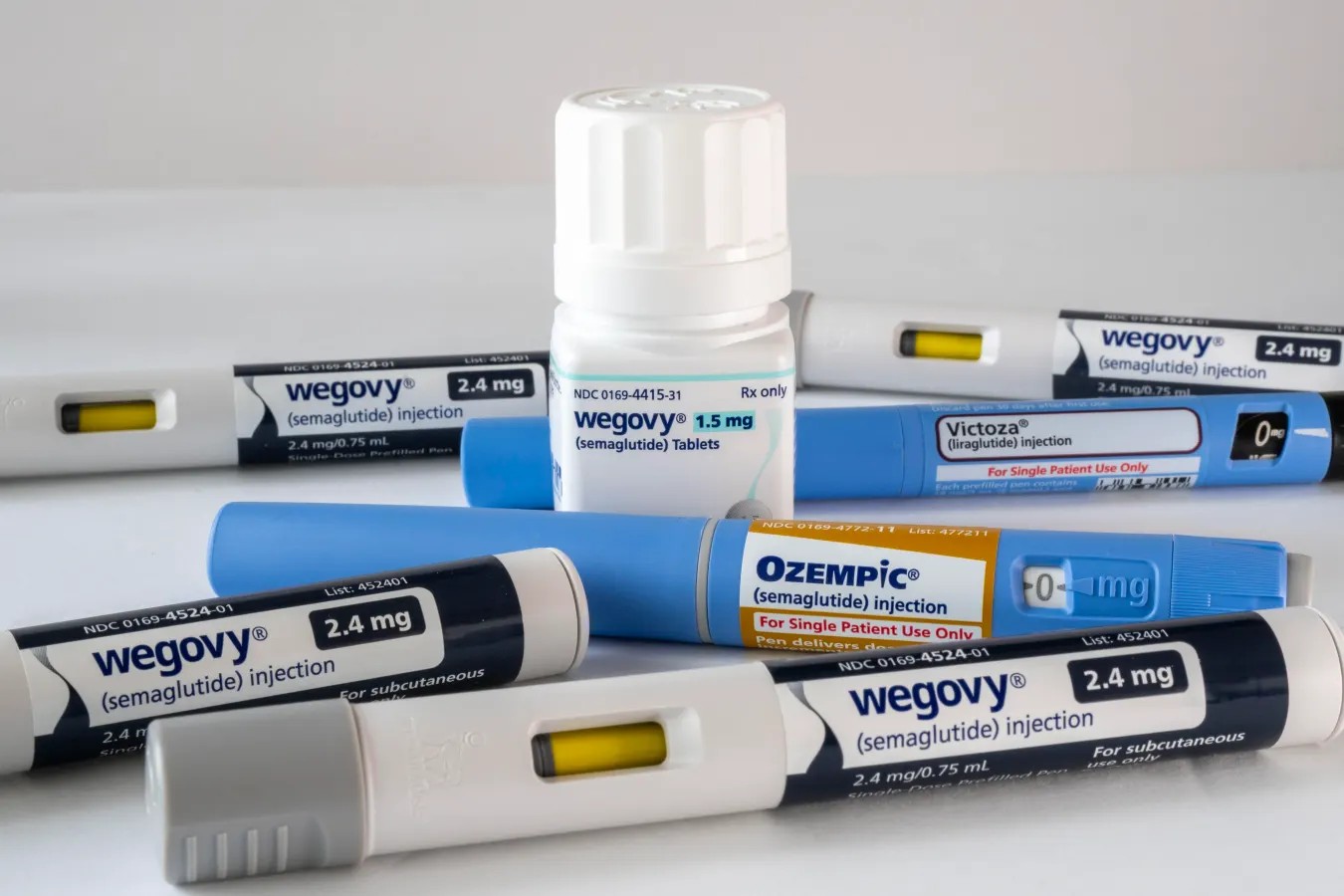
We know what Ozempic, Wegovy, and Mounjaro do. They shrink waistlines. They lower blood sugar. That was the point. But now the point seems to be shifting. Emerging data suggests these GLP-1 receptor agonists might also keep tumors from spreading. It wasn’t on the label. Nobody designed the trial for this. Yet here we are.
A new study presented at the American Society of Clinical Oncoly (ASCO) looked at more than 10,000 cancer patients. The cohort had solid tumors. Breast, prostate, lung, colorectal. Standard stuff, statistically speaking. The researchers compared patients taking GLP-1s to those on gliptins, a different class of diabetes meds called DPP-4 inhibitors. The difference was stark. People on GLP-1s saw their cancer progress far less often.
Mark Orland, a doctor at Cleveland Clinic and lead investigator on the work, didn’t mince words.
“Our study found that use of GLP-2 drugs, compared to DPP-4 inhibitor… was associated with a meaningful reduction cancer progression.”
Meaningful is doing some heavy lifting there, but the numbers back him up. Or so it seems. The data came from TriNetX, a global health network housing records from 145 million people. Big data. The kind that finds needles in haystacks but sometimes mistakes string for a needle too.
The specific cancers studied showed the biggest drops in metastasis risk. Non-small cell lung, breast, colorectal, and hepatic cancers (the liver kind). If you took GLP-1s instead of gliptins after diagnosis, you were 38 to 50 percent less likely to see your cancer jump ship. Side effects? Roughly the same. No spike in toxicity reported.
Is this a breakthrough?
Pause.
Orland calls for cautious optimism. It’s observational. You have to respect what observational data does, but also what it refuses to prove. Just because two things happen together doesn’t mean one causes the other. Maybe people taking GLP-1s have better insurance. Maybe they exercise more. Maybe the doctors prescribing them are just better at monitoring.
Another layer of complexity comes from The Cancer Genome Atlas. When researchers looked at tumors themselves, they found something curious. Tumors with high expression of GLP-1 receptors were linked to better survival rates across seven cancer types. The signal was loudest in breast cancer. That suggests the drug might actually be hitting the target directly. Not just improving metabolic health and hoping for a trickle-down benefit.
Marcin Chwistek at Fox Chase Cancer Center likes that angle.
“GLP-1 receptor agonants have never just glucose-lowering drugs… Their anti-inflammatory… properties have long suggested broader effect.”
The consistency is the key. The scale. A hundred thousand patients don’t lie. They don’t get biased. They just exist in their medical records, waiting to be counted. This consistency demands a randomized controlled trial. That is the next step. Randomizing patients to GLP-1 vs control. Direct comparison. Gold standard evidence.
We are waiting.
Orland’s team has hypotheses, naturally. Is the immune system doing the work? Is the drug whispering directly to the tumor cells via those receptors? Or is it simply quieting systemic inflammation, removing the fuel fire needs to spread? Metabolic reprogramming? All plausible. None confirmed.
The question remains open. And important. We chase answers while taking pills we know work for weight, wondering what else we’re altering. We change bodies to look certain ways and find they fight certain wars differently. Coincidence. Connection.
We’ll know soon enough. Or not. Science rarely delivers closure on command.