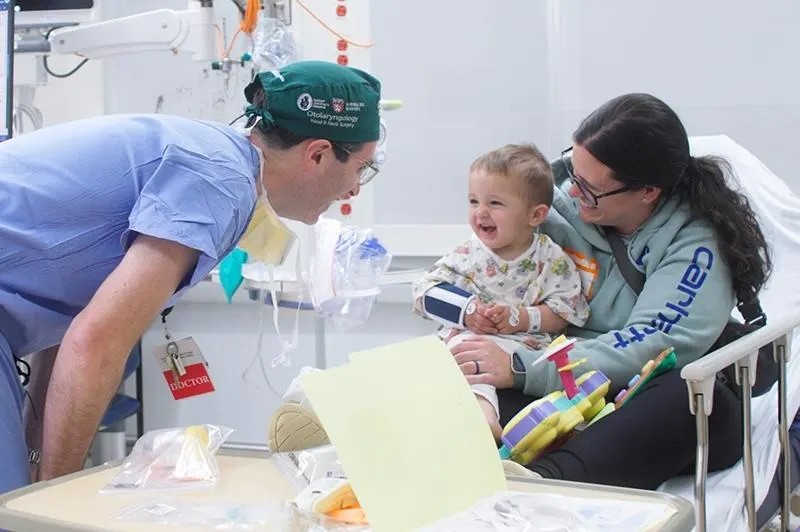
Every thirteen minutes. Another baby is born deaf in the US. Not all deafness is the same, though. Some of these kids have a specific, rare genetic glitch. The hardware? Fine. The software? Broken.
“It’s like the phone is working but the cable isn’t connected,” Dr. Jeffrey Holt explains.
Twenty-five years in the making the FDA finally said yes. The first gene therapy for any kind of deafness in history got its stamp of approval. In the pivotal trial twenty infants kids and teens got the treatment. Eighty percent showed better hearing sensitivity six months later. Longer term forty-two percent reached normal hearing. It was safe. Mostly. A few ear infections, but they cleared up.
“They can hear whispers and they speak. Their life is totally transformed.”
Dr. Zheng-Yi Chen Harvard Medical School
A brand new way to fix a broken ear. Never been done before.
The Hacked Vector
The problem lives in a gene called OTOF. It mutates and stops the signal from the inner ear hitting the brain.
To fix it doctors inject a working copy into the cochlea. Catch twenty-two? The OTOF gene is huge. It won’t fit inside the viral delivery vehicle (the AAV vector) like it used to.
Researchers split the gene. Halves it up. Put piece A in one virus and piece B in another. They shoot them in. Inside the cell the pieces find each other and snap back together. About ninety percent of the time it works. The cell starts using the good copy.
It’s clever. It’s never been validated in humans for this disease before.
Regeneron made this therapy. They are giving it away for free to eligible kids. Eli Lilly is working on the same target. So are groups in Sweden and China. About fifty or sixty patients globally have seen something similar.
“It gets better over six to twelve months,” Chen says. “Then it stays good. No decline for three years now. That’s truly remarkable.”
Speed Is Everything
Time matters. The clock ticks hard.
Dr. Daniel Choo runs the pediatrics side at Cincinnati. He’s also leading the Lilly trial. He wants to treat kids before age three. Ideally younger. That’s when the brain wires itself for language.
Two siblings treated last fall. One was one year old. The other was three and a half. The little one picked up speech fast. The older one is still delayed.
“Hearing isn’t automatic speech,” Choo points out. You restore the sound. You still have to learn to talk.
To treat them early you have to test early. Newborn screening identifies the deafness. Then you find the gene match. Fast.
Implants Are A Dead End?
Cochlear implants are the gold standard right now. Usually given at nine or twelve months.
They turn sound into electricity. It works. It’s not natural. But if you do it early the kid talks. Wait until fifteen? They might hear noise. They probably won’t understand words.
Gene therapy feels more like natural hearing. Because it uses the body’s own biology.
There’s a trap, though.
“Once you put in a cochlear implant you burn the bridge,” Choo says.
Scar tissue. Trauma to the cochlea. You can’t go back. If you implant now you can never use this gene therapy. The window slams shut.
The Next Fifteen
OTO was just the start.
The field now knows this model works. Other genes are waiting in the wings.
“There are 150 genes,” Holt says.
GJB2 is next in line. It causes hearing loss in twenty-one percent of all deaf kids. In ten years Choo bets we’ll cover forty percent of genetic cases.
What About Loud Music?
Does this help adults?
Not really.
About a third of Americans over sixty-five lose their hearing. This isn’t genes. This is damage. Earbuds at max volume. Concerts. Age.
Gene therapy fixes instructions. It doesn’t regrow cells.
“You’re born with 15,000 hairs,” Choo notes. “You don’t get more. When you lose 3,00 of them hearing drops.”
For the older crowd researchers are trying to grow new hairs. It’s worked in mice. It’s worked in birds. Not in monkeys yet. Not in humans.
The door is open. Just a crack.
Kira Peikoff contributed to reporting.