Tradition doesn’t travel in straight lines.
Carloforte. Tiny island. San Pietro, off Sardinia’s southwest coast. You haven’t heard of it? Maybe you should have.
It is the place where Mediterranean cooking stops pretending to be uniform.
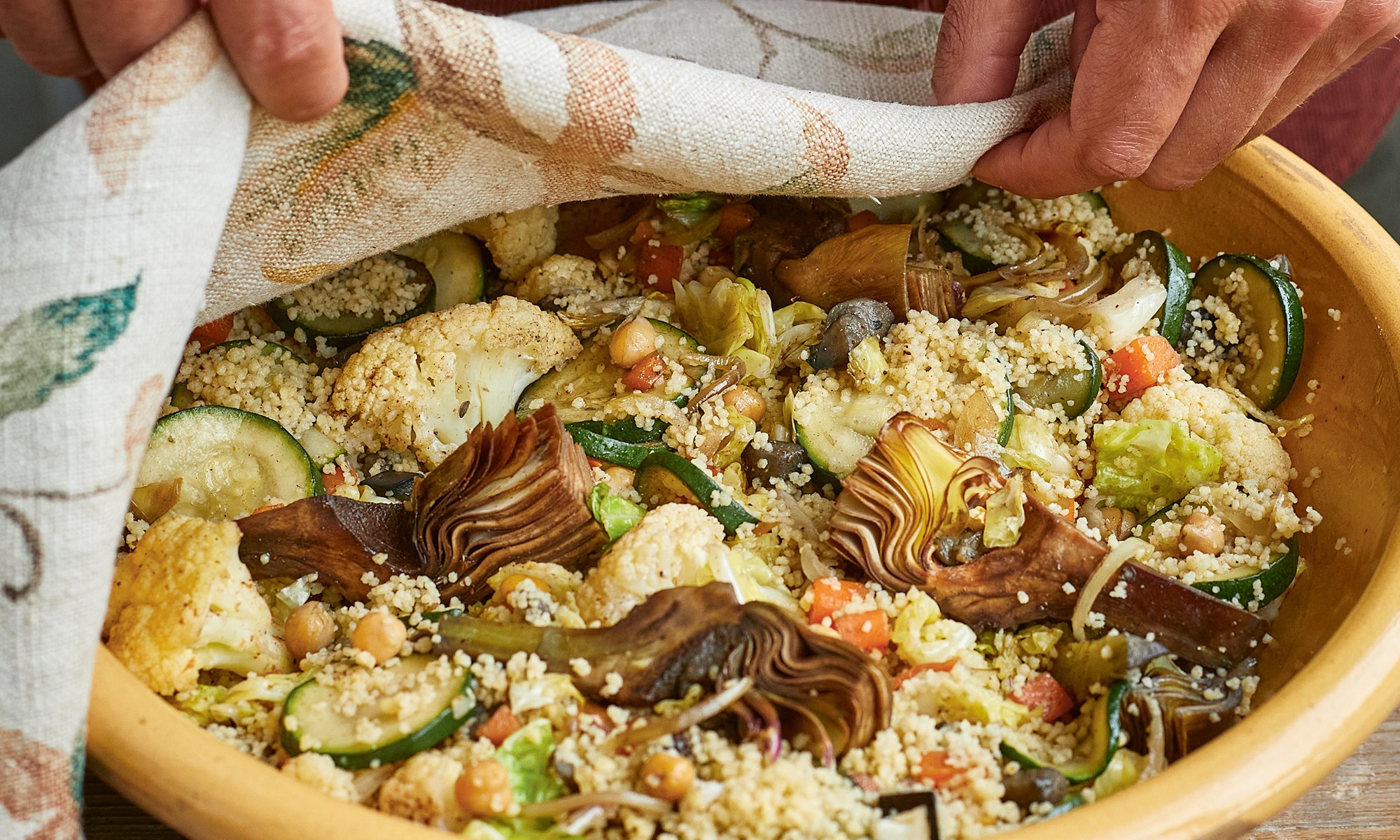
This dish comes from Francesco Mattana’s Eat Like A Sardinian. It’s couscous, but not the North African stuff you usually see. No. This has Arab roots, specifically from Tabarca near Tunisia, but filtered through Liguan fishermen who migrated here for the catch. They brought the spices. They kept the method. The result? Something entirely Sardinian, entirely odd, and deeply flavorful.
Seasonal veg. Toasted spices. Wheat berries steamed, not boiled to mush.
Serve it warm. Serve it cold. Does it matter? No. It’s good either way.
What goes in the pot
Serves 4 to 6 people, more or less depending on how hungry they are.
Ingredients:
– 1 lemon (for the acid, the brightness, the safety against browning)
– 4 artichokes (the main event)
– 250g / 9oz couscous
– 2 courgettes/zucchini, thinly sliced
– 1 small aubergine/eggplant, 1cm / 0.5in cubes
– 2 carrots, peeled, 1cm cubes
– 0.5 cauliflower, florets
– 1 onion, thin slices
– 0.5 Savoy cabbage, chunky slices
– 150g / 5.5oz cooked chickpeas
– 2 1/4 tsp La Saporita spice mix (see below if you hate store brands)
– Extra virgin olive oil, salt, fresh black pepper
How to actually do this
Start with the lemon. Juice half it. Put the rind and the juice in a big bowl of water. This is your bath for the artichokes so they don’t turn sad and grey while you work.
Hold the artichoke. Remove the dark outer leaves at the base. They are tough. Peel them off.
Cut off the top 1 to 2 cm. Leave the stem—about 2.5 cm of it. Peel the stem itself, just the tough outside skin. Cut the vegetable in half. Scoop out the fuzzy “choke” in the center. Use a teaspoon. It’s fast. Cut it in half again. Quarters now. Drop them into the lemon water immediately.
Do this for all four artichokes. Leave them floating. They’ll wait.
The couscous prep:
Put the grain in a bowl. Pinch of salt. Drizzle of oil. Pour in boiling water until it’s 1 cm above the grain. Stir. Cover with plastic or a plate. Walk away. It steams in its own heat.
The veggies:
Get two large frying pans hot.
Pan 1: 1 tbsp oil. Medium-high heat. Toss in courgettes, the artichokes (drained), and the aubergine.
Pan 2: 2 tbsp oil. Medium-high. Carrots, cauliflower, onion, cabbage.
Stir. Keep moving. After 5 minutes, throw the chickpeas into Pan 1 with the squishy vegetables. Cook everything for another 10 minutes. You want them tender. Not soup. Still a bit of crunch is fine.
Here’s where it gets interesting.
Split the La Saporita spice mix between the two pans. Salt. Pepper. Stir hard. One more minute. Turn off the heat.
Uncover the couscous bowl. Fluff it with a fork. It should look light. Mix in all the cooked vegetables from both pans. Add another tablespoon of olive oil just because. Taste it.
Too plain? More salt.
Too dull? More lemon.
Good enough? Stop.
Serve it immediately. Or put it in the fridge and eat it cold tomorrow. Both work. Neither is wrong.
The Spice Question
Buying the pre-made mix is lazy, sure. But making it takes a spice jar hunt. If you prefer that struggle:
- 1/2 tsp ground coriander
- 1/4 tsp ground cinnamon
- 1/4 tsp ground cloves
- 1/4 tsp ground nutmeg
- 1/2 tsp caraway seeds (ground)
- 1/2 tsp aniseed (or ground star anise)
Mix it up. It smells like Christmas dinner that went to sea.
Nutrition note: Roughly 350 calories per serving. 13g protein. 60g carbs. 8g fat. It’s an estimate. Eat it like you enjoy food.
This recipe proves one thing: Geography is fluid. Taste isn’t.